
By: Chris Perkins, Senior Writer and Editor, GM News
Simon Pagenaud was going on vacation. The Indianapolis 500 winner, INDYCAR champion and simulation driver for the Cadillac Formula 1® Team was, of course, entitled to a bit of R&R, but in the fast-paced runup to the team’s F1® debut, someone needed to step in to run some virtual laps.
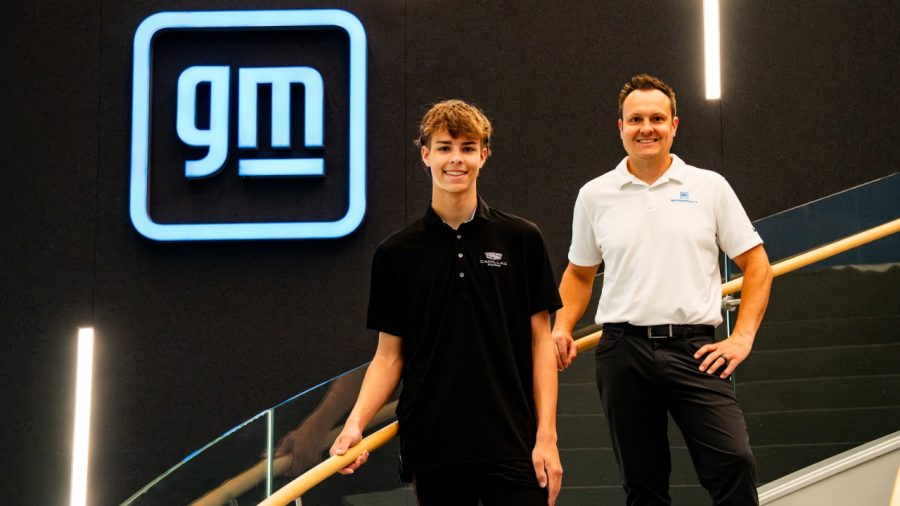
Matt Borland, Director of Motorsport Competition Programs for Cadillac, came to Greg Price, a Design & Manufacturing Manager for GM Motorsports, with an unusual question: What about your son?
Then just 14 years old, Aiden Price might not have seemed like the obvious person to jump into GM’s Charlotte Technical Center driver-in-the-loop (DiL) simulator. But Borland knew he was exactly who the team needed. The teenage Price had already earned multiple wins in micro sprints – small, open-wheel machines that race on short oval tracks – and in iRacing, the premiere online sim-racing platform across the globe. Borland knew that Aiden was a capable driver in real and virtual races, and that he was technically minded, able to understand how small mechanical tweaks can impact a race car’s performance.
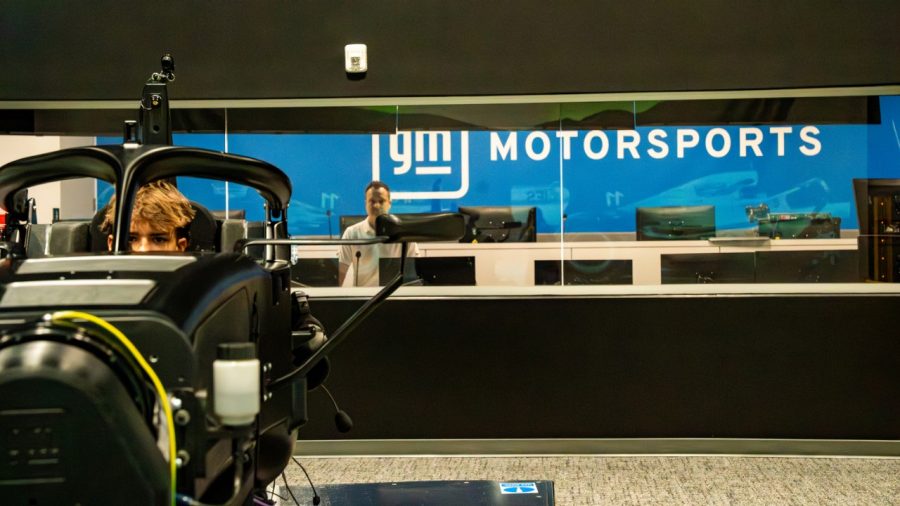
Caption: Aiden in the DIL simulator as Greg watches from the control room.
With permission from the high school principal, Greg pulled Aiden away from class for an evaluation in front of the Cadillac Formula 1® Team. Within 15 minutes, the team knew they had a sim support driver for their roster, and they asked the question any kid would be thrilled to hear: “Any chance you can miss school tomorrow?”
A little over a year later, Aiden Price is enrolled in online high school, which gives him a flexible schedule to work alongside the Cadillac Formula 1® Team’s professional sim drivers Pagenaud and former Formula 1® driver Pietro Fittipaldi.
“I’ve learned a huge amount from the whole team,” Aiden says. “Simon and I will do sessions where we overlap our data and find places where I can improve.”
There's a steep learning curve to driving a modern Formula 1® car, even in the simulator. The driver can make all sorts of electronic adjustments from the cockpit that have a profound effect on the way the car behaves, and the team’s engineers have even more levers they can pull. “It took me a long time to learn what everything did,” Aiden says, “but once you understand it all, it makes sense.”
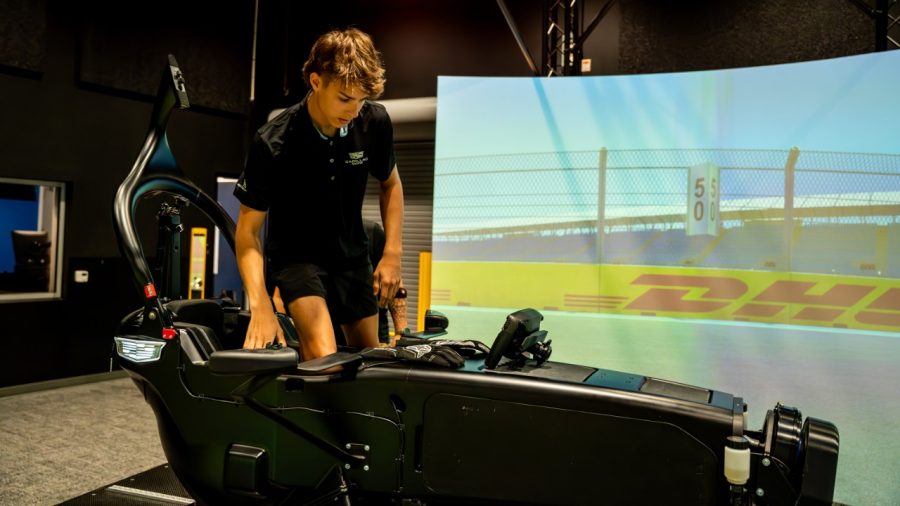
Caption: Aiden enters the DIL simulator, built as an exact replica of a Cadillac Formula 1 race car's cockpit.
In some ways, Aiden began training for this job years ago, before Cadillac began preparing to enter the racing series.
“I’ve always worked with him on setting up cars,” father Greg says. “He’s very in tune with everything we do on our race cars, and in iRacing, he’s had a little side-hustle creating setups and selling them to other drivers online.”
A race car is a device that’s affected by thousands of variables. The pursuit of performance is all about tweaking these many variables to find just the right combination of qualities for maximum speed around a track. This is what race car drivers and engineers call “the setup.”
As the person who oversees component design and manufacturing at GM Motorsports, the elder Price understands the importance of setup profoundly; Aiden has spent much of his life learning from his dad about the nuances of car setup in both the real and virtual worlds. It’s all a big game of cause and effect.
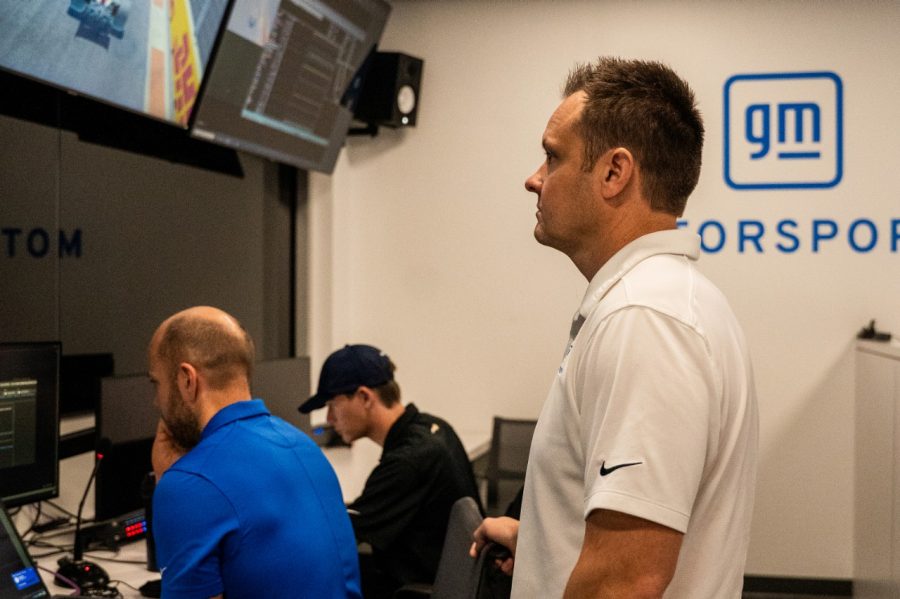
Caption: Greg watches as Aiden runs virtual laps in the DIL.
The emphasis on setup is one thing that makes motorsport unique; another is the fact that practice time is seriously limited. If you’re a golfer, you can go to a driving range and swing to your heart’s content. By contrast, running a race car outside of sanctioned test sessions is costly and complicated. In Formula 1®, official practice time is significantly limited by series regulations— three hours on a given track ahead of the weekend’s race, less if there’s a Sprint Race—and very little outside Grand Prix events.
“That’s why simulators are such good tools,” Greg says. “You can run them all the time, try new things, and figure out what works, from driving techniques to setups. That’s how the Cadillac MAC-26 Formula 1® car was developed. Every single detail was built in simulation, and from there, it went to the UK to be manufactured.”
On the job at GM Motorsports, the two Prices can be like ships passing in the night – especially since Aiden now has his driver’s license and father and son no longer need to drive together. That said, each one’s work has a real effect on the other’s.
Caption: As Aiden drives simulated laps, the DIL cockpit moves and vibrates to simulate g-forces. A wraparound video screen heightens the realism.
A recent example: Aiden was in the DiL, virtually testing a suspension upgrade for the MAC-26 Formula 1® Car in the runup to the 2026 Miami Grand Prix.
“I had already left the office when Matt Borland called me and asked if we could get these new parts built and shipped to the team in Miami the next morning,” Greg recalls. “In the simulator, they were confident that these parts would improve the car, so I had to help get them made and book the first flight to Miami the next day. I arrived with the parts Aiden helped develop as the team was getting to the track. It was a neat thing to see.”
The simulator is also key in helping get the dozens of people who manage strategy across a race weekend working together well. It’s how they “practiced” in the year before the Cadillac Formula 1® Team’s race debut at the 2026 Australian Grand Prix in March, and it’s how the team continues to practice throughout its debut season.
In addition to sharing F1® simulator duties with professional racers Pagenaud and Fittipaldi, Aiden has spent time at the GM Motorsports Charlotte Technical Center driving simulator laps for both the Cadillac LMDh and Chevrolet INDYCAR programs. “It’s helpful to have someone like Aiden cross-collaborating across all of GM Motorsports,” Greg says.
“All these different groups at GM come together and correlate between NASCAR, INDYCAR, LMDh, F1®,” Aiden adds. “Everything that we do all ties together.”
Simon Pagenaud was going on vacation. The Indianapolis 500 winner, INDYCAR champion and simulation driver for the Cadillac Formula 1® Team was, of course, entitled to a bit of R&R, but in the fast-paced runup to the team’s F1® debut, someone needed to step in to run some virtual laps.
Matt Borland, Director of Motorsport Competition Programs for Cadillac, came to Greg Price, a Design & Manufacturing Manager for GM Motorsports, with an unusual question: What about your son?
Then just 14 years old, Aiden Price might not have seemed like the obvious person to jump into GM’s Charlotte Technical Center driver-in-the-loop (DiL) simulator. But Borland knew he was exactly who the team needed. The teenage Price had already earned multiple wins in micro sprints – small, open-wheel machines that race on short oval tracks – and in iRacing, the premiere online sim-racing platform across the globe. Borland knew that Aiden was a capable driver in real and virtual races, and that he was technically minded, able to understand how small mechanical tweaks can impact a race car’s performance.
With permission from the high school principal, Greg pulled Aiden away from class for an evaluation in front of the Cadillac Formula 1® Team. Within 15 minutes, the team knew they had a sim support driver for their roster, and they asked the question any kid would be thrilled to hear: “Any chance you can miss school tomorrow?”
A little over a year later, Aiden Price is enrolled in online high school, which gives him a flexible schedule to work alongside the Cadillac Formula 1® Team’s professional sim drivers Pagenaud and former Formula 1® driver Pietro Fittipaldi.
“I’ve learned a huge amount from the whole team,” Aiden says. “Simon and I will do sessions where we overlap our data and find places where I can improve.”
There's a steep learning curve to driving a modern Formula 1® car, even in the simulator. The driver can make all sorts of electronic adjustments from the cockpit that have a profound effect on the way the car behaves, and the team’s engineers have even more levers they can pull. “It took me a long time to learn what everything did,” Aiden says, “but once you understand it all, it makes sense.”
In some ways, Aiden began training for this job years ago, before Cadillac began preparing to enter the racing series.
“I’ve always worked with him on setting up cars,” father Greg says. “He’s very in tune with everything we do on our race cars, and in iRacing, he’s had a little side-hustle creating setups and selling them to other drivers online.”
A race car is a device that’s affected by thousands of variables. The pursuit of performance is all about tweaking these many variables to find just the right combination of qualities for maximum speed around a track. This is what race car drivers and engineers call “the setup.”
As the person who oversees component design and manufacturing at GM Motorsports, the elder Price understands the importance of setup profoundly; Aiden has spent much of his life learning from his dad about the nuances of car setup in both the real and virtual worlds. It’s all a big game of cause and effect.
The emphasis on setup is one thing that makes motorsport unique; another is the fact that practice time is seriously limited. If you’re a golfer, you can go to a driving range and swing to your heart’s content. By contrast, running a race car outside of sanctioned test sessions is costly and complicated. In Formula 1®, official practice time is significantly limited by series regulations— three hours on a given track ahead of the weekend’s race, less if there’s a Sprint Race—and very little outside Grand Prix events.
“That’s why simulators are such good tools,” Greg says. “You can run them all the time, try new things, and figure out what works, from driving techniques to setups. That’s how the Cadillac MAC-26 Formula 1® car was developed. Every single detail was built in simulation, and from there, it went to the UK to be manufactured.”
On the job at GM Motorsports, the two Prices can be like ships passing in the night – especially since Aiden now has his driver’s license and father and son no longer need to drive together. That said, each one’s work has a real effect on the other’s.
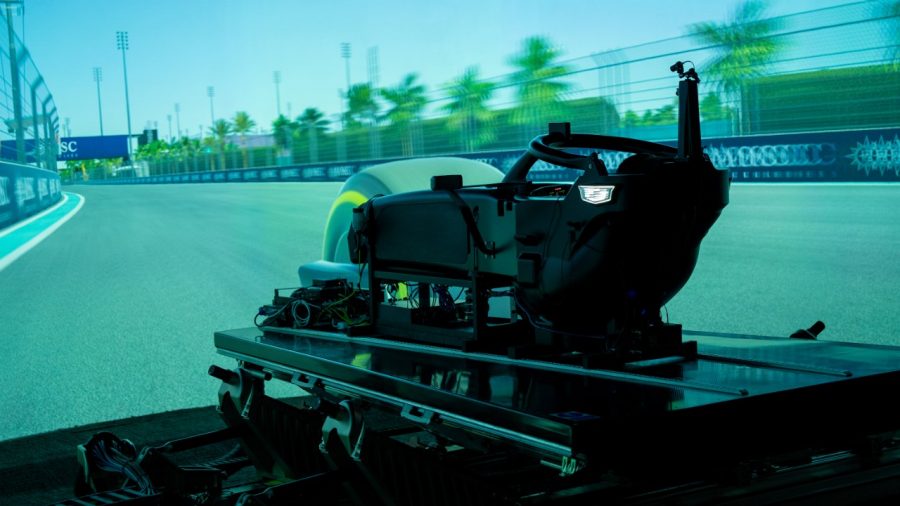
A recent example: Aiden was in the DiL, virtually testing a suspension upgrade for the MAC-26 Formula 1® Car in the runup to the 2026 Miami Grand Prix.
“I had already left the office when Matt Borland called me and asked if we could get these new parts built and shipped to the team in Miami the next morning,” Greg recalls. “In the simulator, they were confident that these parts would improve the car, so I had to help get them made and book the first flight to Miami the next day. I arrived with the parts Aiden helped develop as the team was getting to the track. It was a neat thing to see.”
The simulator is also key in helping get the dozens of people who manage strategy across a race weekend working together well. It’s how they “practiced” in the year before the Cadillac Formula 1® Team’s race debut at the 2026 Australian Grand Prix in March, and it’s how the team continues to practice throughout its debut season.
In addition to sharing F1® simulator duties with professional racers Pagenaud and Fittipaldi, Aiden has spent time at the GM Motorsports Charlotte Technical Center driving simulator laps for both the Cadillac LMDh and Chevrolet INDYCAR programs. “It’s helpful to have someone like Aiden cross-collaborating across all of GM Motorsports,” Greg says.
“All these different groups at GM come together and correlate between NASCAR, INDYCAR, LMDh, F1®,” Aiden adds. “Everything that we do all ties together.”
This article was originally published on June 18, 2026. It has since been updated with new video content.