
By: Chris Perkins, Senior Writer and Editor, GM News
By: Chris Perkins, Senior Writer and Editor, GM News
You probably know that a Formula 1® car is made from thousands of parts. What you might not know is that the Cadillac Formula 1® Team tracks the life of those parts, down to each individual nut and bolt. That’s the subject of the latest episode of the ever-fascinating docuseries What Makes Fast, which shows how, and why, the team does it.
Using a GM-designed software called Race Vehicle Gateway (RVG), Cadillac Formula 1® Team engineers keep meticulous records on tens of thousands of parts. Every individual component gets a serial number, which allows the team to record when, where, and how it was used on the race car in RVG.
The components of a Formula 1® car have a limited lifespan, and it’s critically important the team both gets as much as possible out of each part and retires them at the correct time. RVG is central in tracking the mileage of each component. Engineers also physically inspect parts after each use, so if there’s an issue, they can use data logged into RVG to determine when and why it might have occurred.
RVG has a software sibling—Race Vehicle Simulation (RVS). The data logged into RVG helps inform the Cadillac Formula 1® Team’s vehicle simulations, and vice versa. This allows the team to determine which parts to use on the car down to the exact serial number.
Together, RVG and RVS make up what GM calls Race Vehicle Platform, a tool that helps improve performance on track, and transfer the learnings between motorsports and production vehicle programs.
“Motorsports is part of the global product organization,” says GM Chief Product Officer Sterling Anderson in the docuseries. “Part of the value of that is there’s bilateral exchange of tools, data, and techniques.”
As an example, Anderson cites aerodynamics. Using data from production-vehicle programs, GM has developed machine learning tools that help speed up aerodynamic development for both road and race cars.
GM races in Formula 1® and beyond not just for marketing value, but to develop tools and processes like this. In this case, the huge dataset that lives in RVG not only helps make the Cadillac Formula 1® Team better; it makes all of GM better.
In other words, getting down to the nuts and bolts.
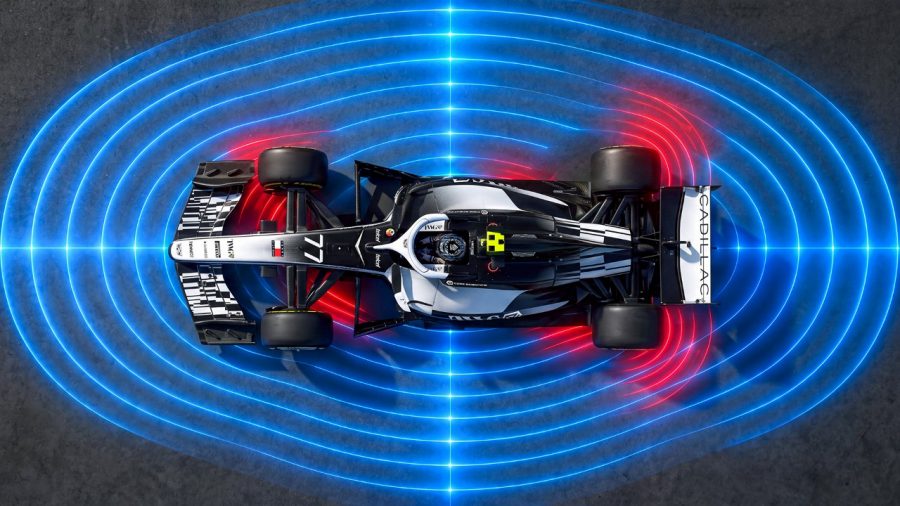
You probably know that a Formula 1® car is made from thousands of parts. What you might not know is that the Cadillac Formula 1® Team tracks the life of those parts, down to each individual nut and bolt. That’s the subject of the latest episode of the ever-fascinating docuseries What Makes Fast, which shows how, and why, the team does it.
Using a GM-designed software called Race Vehicle Gateway (RVG), Cadillac Formula 1® Team engineers keep meticulous records on tens of thousands of parts. Every individual component gets a serial number, which allows the team to record when, where, and how it was used on the race car in RVG.
The components of a Formula 1® car have a limited lifespan, and it’s critically important the team both gets as much as possible out of each part and retires them at the correct time. RVG is central in tracking the mileage of each component. Engineers also physically inspect parts after each use, so if there’s an issue, they can use data logged into RVG to determine when and why it might have occurred.
RVG has a software sibling—Race Vehicle Simulation (RVS). The data logged into RVG helps inform the Cadillac Formula 1® Team’s vehicle simulations, and vice versa. This allows the team to determine which parts to use on the car down to the exact serial number.
Together, RVG and RVS make up what GM calls Race Vehicle Platform, a tool that helps improve performance on track, and transfer the learnings between motorsports and production vehicle programs.
“Motorsports is part of the global product organization,” says GM Chief Product Officer Sterling Anderson in the docuseries. “Part of the value of that is there’s bilateral exchange of tools, data, and techniques.”
As an example, Anderson cites aerodynamics. Using data from production-vehicle programs, GM has developed machine learning tools that help speed up aerodynamic development for both road and race cars.
GM races in Formula 1® and beyond not just for marketing value, but to develop tools and processes like this. In this case, the huge dataset that lives in RVG not only helps make the Cadillac Formula 1® Team better; it makes all of GM better.
In other words, getting down to the nuts and bolts.